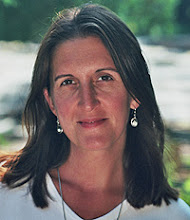
Hey gothic suspense fans!
We just started a giveaway on Goodreads for The Vanishing! Just click on the link to sign up to win a copy of my new book before you can buy it in stores.
The Vanishing, out January 21, is the story of Julia Bishop, who receives an intriguing job offer just as her life is falling apart. A man appears on her doorstep asking her to be a companion to his elderly mother, who just happens to be a famous novelist the whole world thinks is dead. Julia sees this as a chance for a fresh start and accepts the position. But when she gets to Havenwood, the novelist's remote estate in the Minnesota wilderness, she begins to wonder whether this too-good-to-be-true job offer is exactly that.
Tuesday, October 15, 2013

Tuesday, April 30, 2013
A Dark and Stormy Night: 10 Tips for Writing a Paranormal Mystery
I was recently asked to teach a class at a mystery writers’
conference at The Loft Literary Center in Minneapolis. The topic? The art of
writing a paranormal mystery. Since I write these types of tales for a living,
I readily accepted, thinking: “Hey, how hard can it be to teach others how to
do this?” Turns out, it was more difficult than I imagined. I had never before
sat down and thought about how to write these books.
Were there hard and fast rules I followed when writing? Not
likely. I’m lazier than that. Was there a formula for a succesful novel? If
there were, we’d all be bestselling authors. What was I going to tell this room
full of people who had paid money to glean knowledge from me?
I do this for a living, I told myself. I have to know something. So I sat down came up with my
top 10 tips for writing a paranormal mystery.
1. Real world or new world?
The first thing you need to decide is, how paranormal do you
want it to be? You can create a real-world type of story, like my books, or
like The Little Stranger by Sarah Waters http://www.sarahwaters.com
or Seduction by M. J. Rose http://www.mjrose.com
or The Physick Book of Deliverance Dane by Katherine Howe http://www.katherinehowe.com. By “real
world,” I mean your characters live in the real world and simply might have a
hint of eeriness swirling around. Your hero or heroine might be psychic. Or a
witch. Or she might remember past lives. Or he might see ghosts. But all of the
action takes place in our real, flawed world in which something eerie and
strange might be lurking around any ordinary corner.
Or you can create an entirely new world. Great examples of
this are the Harry Potter series or even the Twilight series. Those are worlds
in which wizards go to special boarding schools and Death Eaters are real
dangers, and teenaged vampires drive cars in bright daylight and hunky
werewolves carry torches for sullen humans.
Either choice works for your narrative, but if you create a
new world, you’ll have to do a lot of legwork before you start writing. You
need to create the rules, the mythology, the laws, everything about this world,
before you put one letter on the page. You need to know your new world just as
well as you know your own before you start writing, because one slip up, one
instance in which your characters are caught doing something inconsistent with
the laws in your new world, and you’ll lose your readers. Imagine if Captain
Kirk all of a sudden started casting spells on his crewmen.
2. Once you’ve created
your world, make your readers want to live there. And then pull the rug out
from under them.
The books I love the best are the ones in which I want to
live where the characters are living, or where I’m enticed to go where the
characters are going. One of my favorite books is The Ghost Orchid by Carol
Goodman http://www.carolgoodman.com/Content/The_Ghost_Orchid.asp,
in which a group of artists and writers travel to an artists’ retreat in
upstate New York. I’d love to go to a retreat like that! But no, no, no. As it
turns out, I wouldn’t. If you make your readers want to live there, they’ll put
themselves in the middle of the action and it will be all the more terrifying
when things start to go wrong.
3. Even implausible situations
must be plausible.
If your reader is questioning something about a character’s
behavior in any given scene — Wait, why would
she go down into the cellar when she heard the scream instead of just calling
the police? — it pulls them out of the narrative. You need to answer those questions
before they occur to your reader. She
fished her cell phone out of her purse and tried to turn it on. Dead. She was
on her own.
4.The “dark and stormy
night” cliché isn’t a cliché for nothing.
Not being able to see two feet in front of you while you’re
hearing strange moaning on the other side of the room is scary. Not being able
to leave because it’s storming outside is scary. If it’s eerie in broad
daylight, it’s going to be downright terrifying in the middle of a dark and
stormy night.
5. Adapt The Hero’s
Journey.
The Hero’s Journey is a concept put forth by the great Joseph
Cambell in The Power of Myth, in
which he talks about a common narrative in myths from around the world. The
hero lives an ordinary life. Something happens that causes an upheaval from
this life. He receives a call to adventure, which he initially does not wish to
accept. But then he does, and his adventure begins. One classic example of this
is Luke Skywalker in the first Star Wars movie. Or Harry Potter in the first of
those books. I adapt this concept into something happening in the beginning of
my books to cause my heroine to enter a new life. A parent dies. A strange
letter arrives in the mail and turns the world upside down. A job offer
materializes just as one’s life is in ruins. My heroines must accept these
calls to adventure, and when they do, their stories begin. They’re the reason
my characters can’t simply walk away from the strange things happening around
them.
6. Create
vulnerability or danger that the lead character doesn’t see for awhile, but the
reader does.
One of the most engrossing, addicting and frightening books I’ve
read recently is The Night Strangers by Chris Bohjalian http://www.chrisbohjalian.com/the-night-strangers.
In it, a family moves to a new house, and the reader knows that the daughters
are targeted by an odd group of women in the town. Are these women witches?
Maybe. Are the girls in danger? Yup. We as readers suspect it, but the lead
character doesn’t. When done right, this type of situation will have readers
screaming warnings to the narrator. Or maybe that was just me, reading this
book. Either way, it will keep your readers turning the pages.
7. Give your readers
breaks in the suspense.
Unless you’re writing a thriller, it’s always good to break
up the suspense and tension with humor or a little romance. It gives the reader
a breather, brings down their guard, and it takes your narrative back to the
real world. Think of the Weasley brothers in Harry Potter, or the scene in Raiders
of the Lost Ark in which Indiana Jones has been chased through the streets
by a saber-wielding assassin, and after a dramatic display of swordplay, Indie
simply takes out a gun a shoots him. We all had a good laugh, caught our
breath, and dove into the narrative again.
8. You’ve got to
believe.
I write ghost stories and I travel extensively for readings
to promote my books. During almost every reading I’ve had, someone asks me if I
believe in ghosts. Yes, is the short answer. But even if you don’t believe in
your paranormal phenomenon in the real world — I highly doubt Anne Rice
really believes vampires are prowling around New Orleans… or maybe she does —
you must believe they exist in the world you’re creating. It has to be
absolutely real, plausible and undeniable to you while you’re writing it, or
your readers are going to have doubts, too.
9. Was it just my
imagination?
What if, right now, you looked up from this article and saw a
headless specter floating in the room before you? And then, just as quickly as
that, it faded from view. What would you think? Would you immediately conclude
that your house or office was haunted, you were in danger and it was time to
gather up your things and leave? Or might you think it was just your
imagination, brought on by reading about this topic? Or maybe it was just an
undigested bit of beef, as Scrooge thought. Here in the real world, we like real-world,
sensible explanations for things. We look to explain away eerie or strange
happenings as completely normal. So, don’t make your characters jump to
otherworldly conclusions too quickly.
10. To outline, or not
to outline?
Some writers swear by their outlines. I don’t. I don’t want
to know exactly where my story it going, for a couple of reasons. For one
thing, I don’t trust myself. If I know the answer to the mystery too early, I’m
afraid I’d be giving it away too easily. Also, if I’m surprised while writing
it, I know the reader will be surprised, too. And if I can’t wait to see what’s
waiting on the next page, I hope the reader will feel the same way.
If any of these tips resonate with you, start writing! And if
they don’t, throw them away and make up your own. My opinions are just that, my
opinions. The great thing about writing fiction, folks, is that we get to make
this stuff up.
Wednesday, April 3, 2013
Where do authors get their inspiration?
Here's an essay about where I find mine:
 I’m
lucky enough to spend my days writing novels of gothic suspense in
which family secrets and scandals bubble to the surface in big, old,
haunted mansions. Ever since my first book hit the shelves a few years
back, I’ll oftentimes find myself on panels with other authors at
various book festivals and conferences, and one question we’re always
asked is: “What inspired you to write your story?” Believe me, when
you’re asking mystery, crime, thriller or suspense novelists this
question, you’re going to get some strange, eerie and, let’s be honest,
borderline psychotic answers. Mine included.
Erin Hart’s imagination shifts into high gear when she reads news stories about ancient bodies being pulled out of the peat bogs in Ireland, perfectly preserved. In her four novels, the most recent of which is The Book of Killowen, her lead character investigates these archaeological sites and usually unearths a present-day murder in the bargain. David Housewright revealed that, while attending a crowded music festival, he looked around at the sea of faces and began to marvel at how easy it might be to kill someone and simply slip away unnoticed… and thus began his novel Highway 61, in which an unfortunate fellow wakes up next to a dead body after attending a similar music festival, and thinks he has made a clean getaway until the blackmail threats start arriving.
Now that I’ve got two novels on the shelves, one in the pipeline set for release in January 2014 and a fourth rattling around in my brain, I think it’s safe for me to say that I’m most inspired by place. I need to create the setting where my characters are going to do whatever it is that they do, and then the story flows from there.
 My current novel, The Fate of Mercy Alban (2013, Hyperion), bubbled to the surface during a tour I took of Glensheen Mansion,
a stately, old home on the shores of Lake Superior in Duluth,
Minnesota. Once a private home and now a museum, Glensheen has its own
haunted history — matriarch Elizabeth Congdon and her maid were murdered
in the house by Elizabeth’s daughter and her husband, no less, and
reportedly both of the slain ladies remain — but I wasn’t interested in
writing their story. I wasn’t looking for story inspiration at all. I
was just taking the tour.
It was a gorgeous summer day on Lake Superior, and after wandering from room to glorious room inside, I walked out onto the patio that spans the whole length of the house. I stood there gazing at the meticulously-manicured lawn that flows out to the lake, which was glittering in the summer sun.
I thought: “What a great place to host a party!” And I started imagining it — men in their summer suits, women in long, cotton dresses, servers in black circulating with drinks and hors d’oeuvres. I could almost see the ghostly images of the revelers there in the yard, talking, laughing, listening to music wafting through the air.
And then, being the type of writer I am, I thought: “Ooo. What if somebody wound up dead at that party?”
I could clearly imagine that, too. A gunshot, a scream piercing the night air, the confusion that would follow — stunned onlookers, too traumatized to move, others running for the door, a police siren, faint at first and then growing louder. The anguished cry of grief as a love is lost forever.
I don’t know how long I stood there, caught up in the scene playing out in my own mind. The thought of it just wouldn’t let me go. And so began The Fate of Mercy Alban, a novel centered around a long-ago summer party at a stately old mansion much like Glensheen, where one of the party guests, a world-famous writer, winds up dead, and the daughter of the host and hostess disappears without a trace.
Now I’m looking for inspiration for my fourth novel. Know of any haunted mansions to tour?
Wendy Webb is the author of the Heartland Indie bestselling novel, The Fate of Mercy Alban (2013, Hyperion), and The Tale of Halcyon Crane, (2010, Holt), which won the Minnesota Book Award for genre fiction. Her newest book, The Vanishing, will be released in January, 2014. Visit her online at www.wendykwebb.com.
An Author’s Inspiration: On The Fate of Mercy Alban
Apr 02, 2013 in Guest Posts, Writing
I’m
lucky enough to spend my days writing novels of gothic suspense in
which family secrets and scandals bubble to the surface in big, old,
haunted mansions. Ever since my first book hit the shelves a few years
back, I’ll oftentimes find myself on panels with other authors at
various book festivals and conferences, and one question we’re always
asked is: “What inspired you to write your story?” Believe me, when
you’re asking mystery, crime, thriller or suspense novelists this
question, you’re going to get some strange, eerie and, let’s be honest,
borderline psychotic answers. Mine included.Erin Hart’s imagination shifts into high gear when she reads news stories about ancient bodies being pulled out of the peat bogs in Ireland, perfectly preserved. In her four novels, the most recent of which is The Book of Killowen, her lead character investigates these archaeological sites and usually unearths a present-day murder in the bargain. David Housewright revealed that, while attending a crowded music festival, he looked around at the sea of faces and began to marvel at how easy it might be to kill someone and simply slip away unnoticed… and thus began his novel Highway 61, in which an unfortunate fellow wakes up next to a dead body after attending a similar music festival, and thinks he has made a clean getaway until the blackmail threats start arriving.
Now that I’ve got two novels on the shelves, one in the pipeline set for release in January 2014 and a fourth rattling around in my brain, I think it’s safe for me to say that I’m most inspired by place. I need to create the setting where my characters are going to do whatever it is that they do, and then the story flows from there.
My current novel, The Fate of Mercy Alban (2013, Hyperion), bubbled to the surface during a tour I took of Glensheen Mansion,
a stately, old home on the shores of Lake Superior in Duluth,
Minnesota. Once a private home and now a museum, Glensheen has its own
haunted history — matriarch Elizabeth Congdon and her maid were murdered
in the house by Elizabeth’s daughter and her husband, no less, and
reportedly both of the slain ladies remain — but I wasn’t interested in
writing their story. I wasn’t looking for story inspiration at all. I
was just taking the tour.It was a gorgeous summer day on Lake Superior, and after wandering from room to glorious room inside, I walked out onto the patio that spans the whole length of the house. I stood there gazing at the meticulously-manicured lawn that flows out to the lake, which was glittering in the summer sun.
I thought: “What a great place to host a party!” And I started imagining it — men in their summer suits, women in long, cotton dresses, servers in black circulating with drinks and hors d’oeuvres. I could almost see the ghostly images of the revelers there in the yard, talking, laughing, listening to music wafting through the air.
And then, being the type of writer I am, I thought: “Ooo. What if somebody wound up dead at that party?”
I could clearly imagine that, too. A gunshot, a scream piercing the night air, the confusion that would follow — stunned onlookers, too traumatized to move, others running for the door, a police siren, faint at first and then growing louder. The anguished cry of grief as a love is lost forever.
I don’t know how long I stood there, caught up in the scene playing out in my own mind. The thought of it just wouldn’t let me go. And so began The Fate of Mercy Alban, a novel centered around a long-ago summer party at a stately old mansion much like Glensheen, where one of the party guests, a world-famous writer, winds up dead, and the daughter of the host and hostess disappears without a trace.
Now I’m looking for inspiration for my fourth novel. Know of any haunted mansions to tour?
Wendy Webb is the author of the Heartland Indie bestselling novel, The Fate of Mercy Alban (2013, Hyperion), and The Tale of Halcyon Crane, (2010, Holt), which won the Minnesota Book Award for genre fiction. Her newest book, The Vanishing, will be released in January, 2014. Visit her online at www.wendykwebb.com.
Tuesday, March 26, 2013
The Best Ghost Stories I've Heard on my Book Tour
I've got a new blog on the Huffington Post's books section — which I'm thrilled about!! — and I thought you might like to read my newest article about the best ghost stories I've heard on my book tour.
It's a lot of fun, and I mention several bookstores I've visited in the past month. Have you ever had a ghostly experience? Do tell!
It's a lot of fun, and I mention several bookstores I've visited in the past month. Have you ever had a ghostly experience? Do tell!
Tuesday, March 12, 2013
Reader's Loft Bookstore
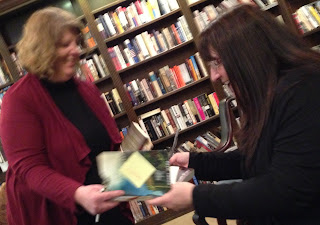
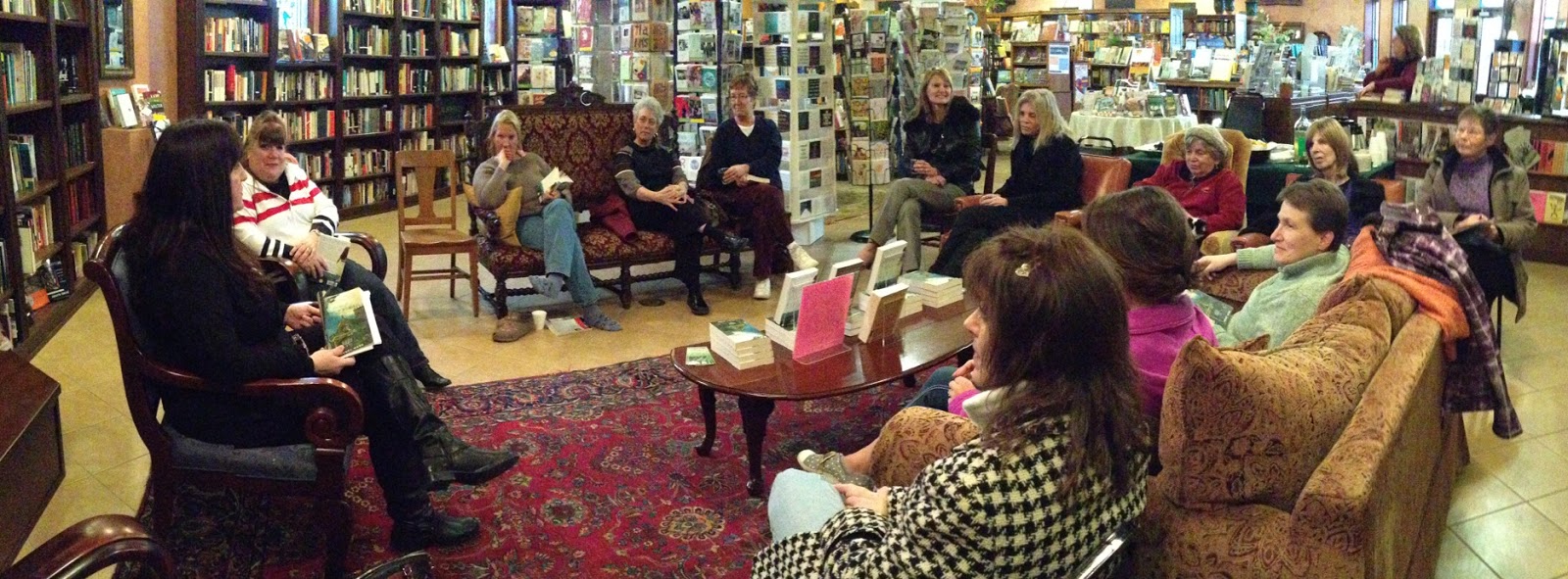
What a fun night at one of my favorite bookstores, Reader's Loft Bookstore in Green Bay. It's a beautiful, welcoming, comfortable place with two cats prowling the shelves and fantastic booksellers who always have recommendations for the next wonderful read. And they create great events for authors. Tonight, I met with a large book club that read Mercy in advance of my visit — this is what authors love! I am forever grateful for this kind of support! Here are a few photos of the beautiful Readers Loft Bookstore and the wonderful people who came out to see me.





Friday, March 8, 2013
Magers & Quinn Photos!
I had such a fantastic time last night at Magers & Quinn in Uptown Minneapolis. This fabulous neighborhood bookstore was the site of my first-ever reading for my first novel, The Tale of Halcyon Crane, and it has held a special place in my heart ever since.
The events organizer introduced me with the greatest compliment I've ever received about my writing, saying that at M & Q they think of me as the "Daphne Du Maurier of Duluth." How about that?!
I was really touched by how many people came out to support me in my home town. As I was reading, I looked into the crowd and saw old friends I hadn't seen since high school and college, new friends I've made through the incredible book community here in the Twin Cities — author Peter Geye and local bookmaven Pamela Klinger Horn — and lots and lots of readers. Every seat was filled and people were actually standing in the aisles!
If there was a reading made for me in heaven, this one was it.


Thursday, March 7, 2013
Photos from Common Good Books, 3/6/13 with Erin Hart!
I had a fun and fantastic reading last night at Common Good Books in St. Paul with my friend and fellow author Erin Hart, whose new novel, The Book of Killowen, was released this week. We each read from our novels and then took questions as a team. The crowd was very engaged and asked lots of good questions. A great night at a great bookstore! Here are a few photos.


Subscribe to:
Posts (Atom)